Role Disruption
People are asked to work differently before they understand who they are becoming.
A strategic framework for creating the conditions people need to trust, adapt, contribute, and thrive in the age of AI.
Organizations invest heavily in technology, processes, skills, and operating models. Yet transformation often stalls because the identity conditions required for people to adopt, trust, and sustain change remain invisible.
Identity infrastructure is the set of cultural, relational, psychological, and organizational conditions that shape whether people believe they belong, can contribute, are safe to adapt, and can see themselves succeeding in a changing system.
This paper presents identity infrastructure not as a soft complement to strategy, but as a strategic operating capability.
The Core Argument
Identity is not a byproduct of success. It is the system that makes sustained success possible.
The Identity Problem
People are asked to work differently before they understand who they are becoming.
Transformation can unintentionally signal that experience, identity, or history no longer matters.
When decisions feel opaque, people withdraw judgment, voice, and discretionary effort.
Training can increase knowledge without increasing a person's belief that they can use it.
The Architecture
Identity infrastructure must be designed as an interconnected system rather than a collection of isolated culture initiatives. Each layer shapes how people interpret change, make decisions, contribute knowledge, and sustain performance.
Prepares identity and capability for continuous technological change.
Creates meaningful pathways for voice, judgment, ownership, and impact.
Connects skill development with self-efficacy and practical application.
Signals that people are seen, valued, and expected to contribute.
Clarifies the beliefs, narratives, and experiences shaping participation.
Design Principles
Name identity conditions explicitly rather than treating them as invisible culture variables.
Track trust, belonging, agency, confidence, and resilience alongside adoption and performance.
Design transformation with the people who must live inside the new system.
Ensure AI decisions, data use, and automation preserve human dignity and responsible judgment.
Build the capacity to reinterpret identity as roles, tools, and expectations continue to change.
Embed identity conditions into leadership, talent, governance, workflow, and decision systems.
Executive Implications
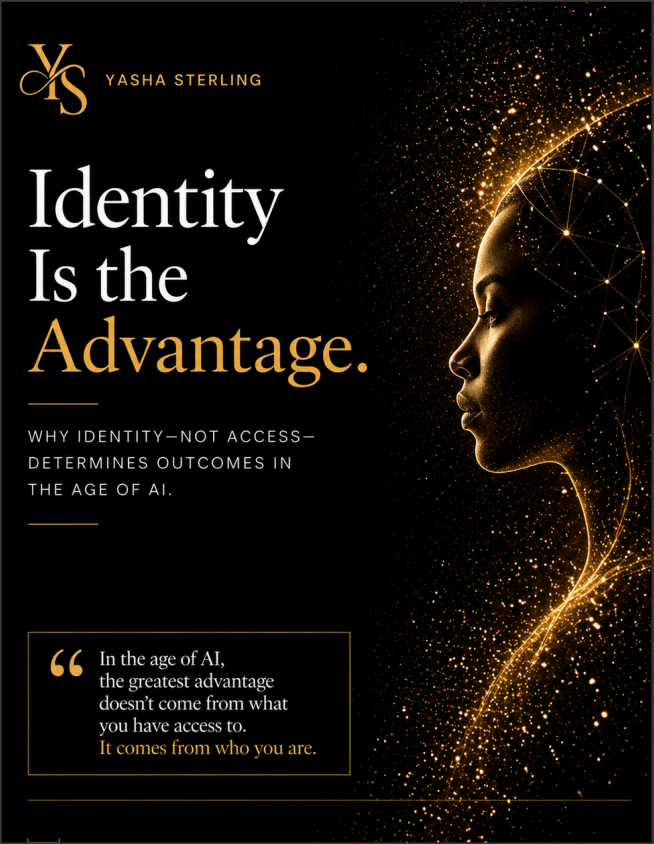
Companion Whitepaper
Read the strategic case for why identity is becoming a source of trust, adaptability, differentiation, and human advantage in intelligent systems.
Explore the WhitepaperThe Work Ahead
The organizations that thrive in the AI era will not be those that deploy technology fastest. They will be those that build the identity infrastructure that allows people to move with it.
Return to the Hall of Frameworks™